TCF Canada Preparation Course: Online & Offline Options in Gurugram
Canada remains one of the most sought-after destinations for skilled immigration, and French language proficiency has quietly become one of the most powerful tools in an applicant’s Express Entry toolkit. For professionals living in Gurugram — India’s corporate and IT hub — the demand for structured TCF Canada preparation has grown sharply over the past couple of years. This guide walks through what the TCF Canada exam actually involves, why it matters for your Canadian PR dreams, and how to choose between the online and offline coaching options now available in and around Gurugram.
1. Understanding the TCF Canada Exam
1.1 What Exactly Is the TCF Canada?
The TCF Canada (Test de Connaissance du Français pour le Canada) is a standardized French proficiency test recognized by Canadian immigration authorities to assess French language skills and measure a candidate’s ability to communicate in French in everyday situations. It is administered by France Éducation international (FEI), a French public body responsible for language certification worldwide.
Unlike the general TCF, which is used for study or citizenship purposes in France, the TCF Canada version focuses mainly on listening and reading comprehension along with oral and written expression. This makes it slightly different in structure and scoring emphasis from other TCF variants, so candidates need Canada-specific preparation rather than generic French classes.
1.2 The Four Modules at a Glance
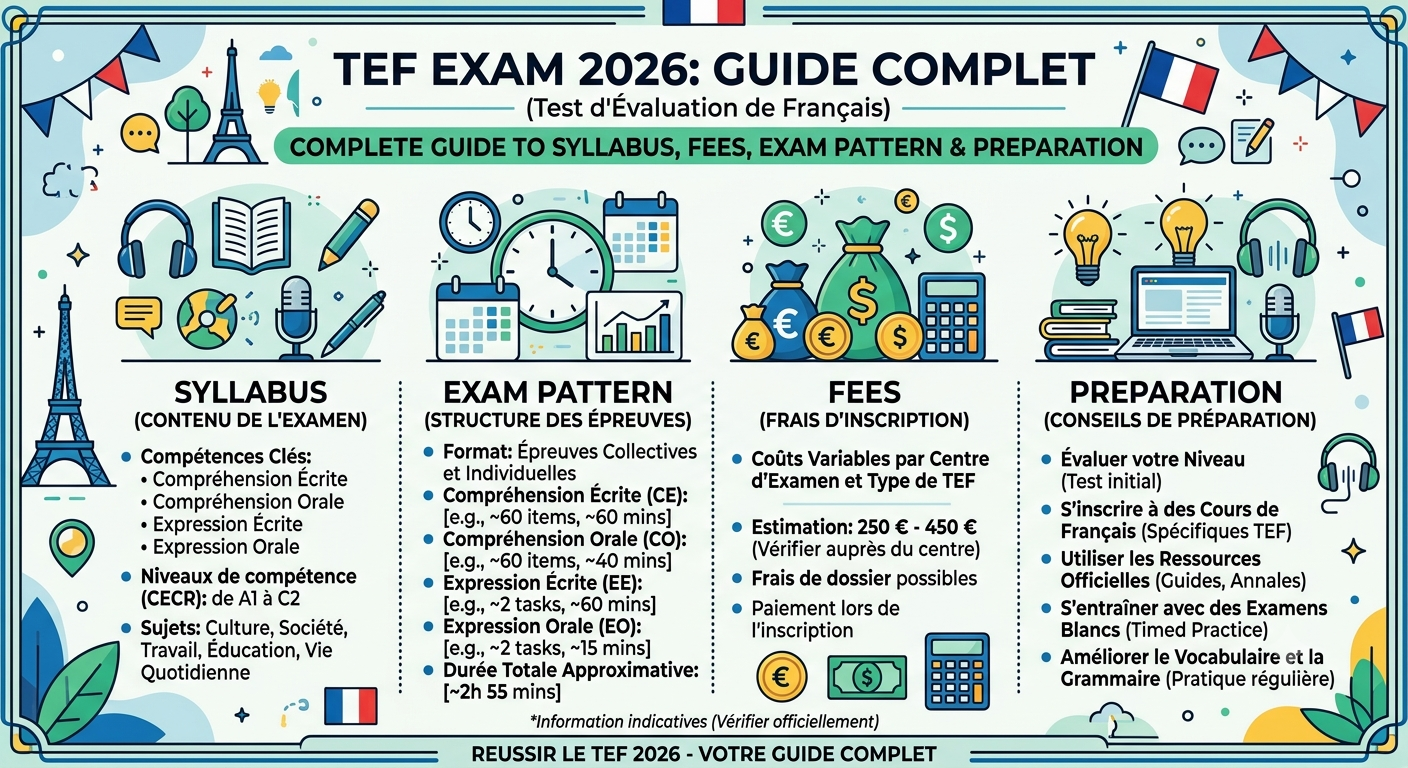
The TCF Canada consists of four compulsory modules assessing both oral and written proficiency. Each module is timed separately and scored independently, then mapped onto the Canadian Language Benchmark (CLB) scale.
| Module | Format | Number of Questions | Duration |
|---|---|---|---|
| Listening Comprehension | Multiple-choice, group setting | 39 questions | 35 minutes |
| Reading Comprehension | Multiple-choice, group setting | 39 questions | 60 minutes |
| Written Expression | Writing tasks of increasing difficulty | 3 tasks | ~60 minutes |
| Oral Expression | Face-to-face interview with examiner | 3 tasks | ~12 minutes |
The written and oral tasks generally increase in difficulty — from simple descriptive writing to more argumentative, opinion-based tasks — so preparation needs to build progressively rather than jumping straight into advanced structures.
1.3 Why French Proficiency Matters for Canadian Immigration
Canada has a bilingual mandate, and provinces like Quebec, along with federal Express Entry French-language proficiency draws, actively reward candidates who can prove competence in French. Even outside Quebec-specific programs, having both English and French test scores can push a candidate’s CRS score up by hundreds of points, often being the deciding factor between receiving an Invitation to Apply (ITA) or not.
Because of this, the TCF Canada has moved from being a niche exam to one of the most searched immigration-related certifications in Delhi NCR, with Gurugram professionals increasingly enrolling in dedicated preparation batches rather than relying on casual language learning apps.
1.4 How Scores Translate to CLB Levels
Each module score is converted into a CLB level, and IRCC awards CRS points based on your CLB band per skill. While official conversion tables should always be checked on the IRCC website before finalizing a study plan, the general logic looks like this:
| CLB Level | Approximate Proficiency | Typical CRS Relevance |
|---|---|---|
| CLB 4–5 | Basic functional French | Minimal additional points |
| CLB 6 | Intermediate, workplace-usable French | Moderate bonus points, especially combined with English CLB 5+ |
| CLB 7 | Strong intermediate-advanced | Significant CRS bonus under Express Entry |
| CLB 9+ | Advanced, near-native fluency | Maximum bonus points, often decisive for an ITA |
Most Gurugram candidates preparing for Express Entry target CLB 7 as the realistic “sweet spot,” since it delivers a strong CRS boost without requiring years of intensive study.
2. Where the Exam Is Actually Held
It’s worth noting upfront: Gurugram itself does not host the official TCF Canada test centre. The exam is conducted in person, with the Delhi NCR test site located at Alliance Française de Delhi in Lodhi Estate, New Delhi. Since the exam is now computer-based, candidates are only allowed to bring their photo ID and convocation printout into the exam room — no phones, smartwatches, food, or drinks are permitted.
This is an important detail because seats fill up extremely fast. TCF Canada exam seats are limited and allocated on a first-come, first-served basis, and due to high demand, seats often fill within minutes of registration opening, for both online and offline registration modes. Gurugram-based candidates are therefore strongly advised to register in advance and set reminders for registration windows.
Because the actual test happens in Delhi, most Gurugram residents build their entire preparation locally or online, and simply travel to Delhi only on exam day — which is exactly why the “preparation course” market in Gurugram has expanded so much, filling a real logistical gap.
3. Preparation Institutes and Options Available in Gurugram
3.1 Classroom-Based Training in Gurugram Itself
One well-known option is a dedicated TEF/TCF Canada French course running out of Sector 37, Gurugram. This institute offers both online and classroom training tailored to help candidates achieve a higher CRS score, with a focus on practical language use and comprehensive exam preparation. It operates Monday through Saturday, with weekday hours from 9 AM to 7 PM and shorter Saturday hours, remaining closed on Sundays. Its classroom setup appeals to candidates who prefer face-to-face correction, especially for the speaking module, where real-time feedback on pronunciation and fluency is hard to replicate online.
3.2 Delhi NCR Institutes Serving Gurugram Candidates Remotely
Since Gurugram sits so close to Delhi and Noida, several established institutes headquartered there effectively serve the Gurugram catchment through live online batches. For example, one Noida-based French institute offers structured courses covering speaking, listening, reading, writing and grammar, with focused coaching for DELF, TEF Canada, and TCF Canada exams, and allows students to join classes in Noida or study online from anywhere. This hybrid accessibility is a major reason many Gurugram professionals — who often have demanding work schedules — opt for such providers instead of commuting.
3.3 Alliance Française de Delhi
As the official exam centre operator, Alliance Française de Delhi also runs structured French classes for adults and non-beginners, along with “Focus French” courses geared toward specific certifications, making it a natural (if more traditional and possibly slower-paced) option for serious, long-term learners.
3.4 Fully Online, Exam-Focused Platforms
For candidates who want maximum flexibility, several platforms cater specifically to remote TCF Canada preparation. One such option offers personalized one-on-one French sessions with proven TEF and TCF exam preparation methods, structured training covering speaking practice, listening comprehension strategies, reading and vocabulary development, writing correction, grammar from A1 to B2, and mock tests with real exam techniques, at a stated session fee of INR 2,500 per session. Another dedicated online platform, TCFPrep.ca, focuses specifically on CLB improvement and practical skills rather than generic French lessons, mirroring the real TCF Canada format — useful as a supplementary self-study tool alongside a live tutor.
3.5 International and Freelance Tutoring Platforms
Some Gurugram candidates also turn to global tutoring marketplaces, where certified examiners and native French speakers offer specialized, high-intensity coaching. One highly reviewed tutor profile, for instance, specializes in high-performance preparation for the TCF Canada, offering advanced criteria-based corrections aligned with official scoring grids and high-pressure simulations to build speed, precision, and confidence. These sessions tend to be pricier per hour but offer intensive, targeted correction — ideal for candidates who already have an intermediate French base and need to polish exam technique rather than learn the language from scratch.
3.6 Quick Comparison of Preparation Options
| Option Type | Best For | Typical Format | Relative Cost |
|---|---|---|---|
| Gurugram classroom institute (e.g., Sector 37) | Beginners wanting face-to-face correction | Fixed batch timings, in-person | Moderate |
| Delhi/Noida institute with online batches | Working professionals needing flexibility + structure | Live online classes, group batches | Moderate |
| Alliance Française de Delhi | Long-term, foundational learners | In-person classroom, structured levels | Moderate to High |
| Dedicated online exam platforms (e.g., TCFPrep.ca) | Self-motivated learners needing exam-specific drilling | Self-paced digital content + mock tests | Low to Moderate |
| 1-on-1 online tutoring (Indian or international) | Intermediate/advanced learners polishing exam technique | Personalized live sessions | Moderate to High |
| Free AI-assisted practice platforms | Supplementary self-study, budget-conscious learners | Free online mock questions + AI tools | Free |
4. Online vs Offline: Which Should You Choose?
The right choice really depends on your starting French level, your schedule, and how much personalized correction you feel you need — especially for the speaking and writing sections, which are the two modules where most candidates lose points.
4.1 Offline (In-Person Classroom) Advantages
- Direct, real-time correction of pronunciation and spoken fluency — critical for the oral expression module.
- Structured peer environment that keeps beginners accountable and motivated.
- Easier access to printed materials, mock speaking partners, and immediate doubt resolution.
- Better suited to complete beginners who need to build foundational grammar and vocabulary from A1 upward, since language acquisition often benefits from consistent, immersive classroom exposure.
4.2 Online Preparation Advantages
- No commute — a major factor for working professionals in Gurugram juggling office hours with exam prep. Most learners take between 3 to 8 months of structured online preparation with regular practice, mock tests, and personalized guidance to achieve strong results, which fits well around a full-time job.
- Flexible batch timings, letting you balance work, family, and study — many programs offer multiple batch timings so learners can build their schedule around daily commitments.
- Access to specialized instructors regardless of geography — you’re not limited to whoever teaches near your neighborhood in Gurugram; you can choose a certified TCF examiner based anywhere in the world.
- Digital mock tests and AI-assisted tools. Some platforms even provide free, structured practice; one such free program offers AI-assisted services including question translation, question analysis, thematic writing support, smart correction, and text-to-speech conversion to make self-study more efficient.
4.3 Side-by-Side Comparison
| Criteria | Offline / Classroom | Online / Remote |
|---|---|---|
| Speaking practice quality | Excellent — live, in-person correction | Good, if 1-on-1; weaker in large group batches |
| Schedule flexibility | Low — fixed batch timings | High — evening/weekend batches, self-paced options |
| Commute required | Yes | No |
| Best starting level | Complete beginners (A0–A1) | Intermediate learners (A2–B1) refining exam skills |
| Access to specialized/native tutors | Limited to local city talent pool | Wide access — India-wide or global tutors |
| Cost efficiency | Moderate to high (venue overheads) | Often lower, with free supplementary tools available |
| Accountability & peer motivation | Strong, in a classroom cohort | Depends on self-discipline |
For most Gurugram-based professionals — who tend to have solid English fluency, a full-time job, and roughly A2–B1 level French already — a hybrid approach tends to work best: online grammar and reading/listening practice for flexibility, combined with periodic in-person or one-on-one speaking sessions for live correction closer to the exam date.
5. How Long Should You Prepare?
Timelines vary significantly based on starting level. Some programs suggest 8-12 weeks of intensive preparation for candidates already close to exam-ready, while others recommend 3-6 months to build from an intermediate level to full exam readiness. Other providers pitch longer runways — an 8-month structured plan taking a complete beginner to a master level — depending on how much foundational grammar work is needed before exam-specific strategy training even begins.
| Starting Level | Recommended Prep Duration | Focus Areas |
|---|---|---|
| Complete beginner (A0–A1) | 6–9 months | Foundational grammar, vocabulary, basic listening/reading |
| Elementary (A2) | 4–6 months | Grammar consolidation, exam format familiarization |
| Intermediate (B1) | 2–4 months | Exam strategy, timed practice, writing structure |
| Upper-intermediate/Advanced (B2+) | 6–12 weeks | Mock tests, fine-tuning, speaking fluency polish |
A sensible way to think about this: if you’re starting from scratch, budget on the longer end. If you already have conversational French and just need exam strategy and mock-test practice, a couple of months of focused coaching is often sufficient.
6. What a Good TCF Canada Course Should Include
Regardless of whether you pick an online or offline provider in Gurugram, look for these non-negotiables:
6.1 Module-Specific Coaching
Dedicated practice for all four skills (listening, reading, writing, speaking), not generic conversational French classes.
6.2 Timed Mock Tests
Complete full-length mock exams and practice tests under timed conditions are essential to build stamina and pacing, since the real exam runs on strict per-section timers.
6.3 Personalized Feedback on Writing and Speaking
Since these are subjectively scored, detailed correction against the official CLB scoring grid matters far more than generic grammar drilling.
6.4 CLB-Target Alignment
Your coaching should tie preparation directly to your target CLB level for immigration purposes, rather than treating the test like an academic French exam.
6.5 Demo Classes Before Enrollment
Reputable institutes encourage learners to attend demo classes and speak with counselors to understand terms clearly before enrolling, which is a good filter for quality and fit.
7. Result Timelines and Practical Planning
Once you’ve taken the exam, be prepared for a short wait. Official certificates indicating scores for each module are typically issued within 2 to 4 weeks after the test date. If you’re timing your Express Entry profile or a program application around this, build that 2-4 week buffer into your planning — especially since IRCC deadlines don’t bend for pending certificates.
| Milestone | Typical Timeframe |
|---|---|
| Registration window opens (fills within minutes) | Announced periodically by AFD Delhi |
| Preparation duration (beginner to intermediate) | 4–9 months |
| Preparation duration (intermediate to exam-ready) | 6 weeks–4 months |
| Exam day (Delhi centre) | Fixed date, computer-based |
| Result & certificate issuance | 2–4 weeks post-exam |
8. Final Thoughts
For Gurugram residents eyeing Canadian PR, the TCF Canada has become far more than an optional add-on — for many, it’s the single biggest lever available to boost CRS scores quickly. The good news is that the local ecosystem has matured: you can choose a Sector 37 classroom batch for hands-on correction, join a Delhi/Noida-based institute’s live online sessions for flexibility, or pair a dedicated online exam-prep platform with one-on-one speaking practice from a certified tutor abroad. Whichever route you pick, prioritize mock testing, CLB-aligned feedback, and realistic timelines — and remember to register early, since seats at the Delhi exam centre disappear within minutes once registration opens.