French Course Online vs Self-Learning: What Should You Choose
French is spoken by over 300 million people across five continents. It is an official language of the United Nations, the European Union, and the Olympic Games, and it opens doors in business, travel, diplomacy, and culture. Whether you want to move to Paris, pass the DELF exam, impress colleagues in Montreal, or read Camus in the original, the first question is the same: how should I learn it?
Most learners end up choosing between two paths:
- An online French course, with structured lessons, a curriculum, and often a live teacher.
- Self-learning, where you build your own study plan from apps, books, podcasts, videos, and free resources.
Neither is universally better. The right choice depends on your goals, budget, discipline, schedule, and learning style. This guide compares both approaches in detail so you can decide with confidence.
Understanding the Two Approaches
What Is an Online French Course?
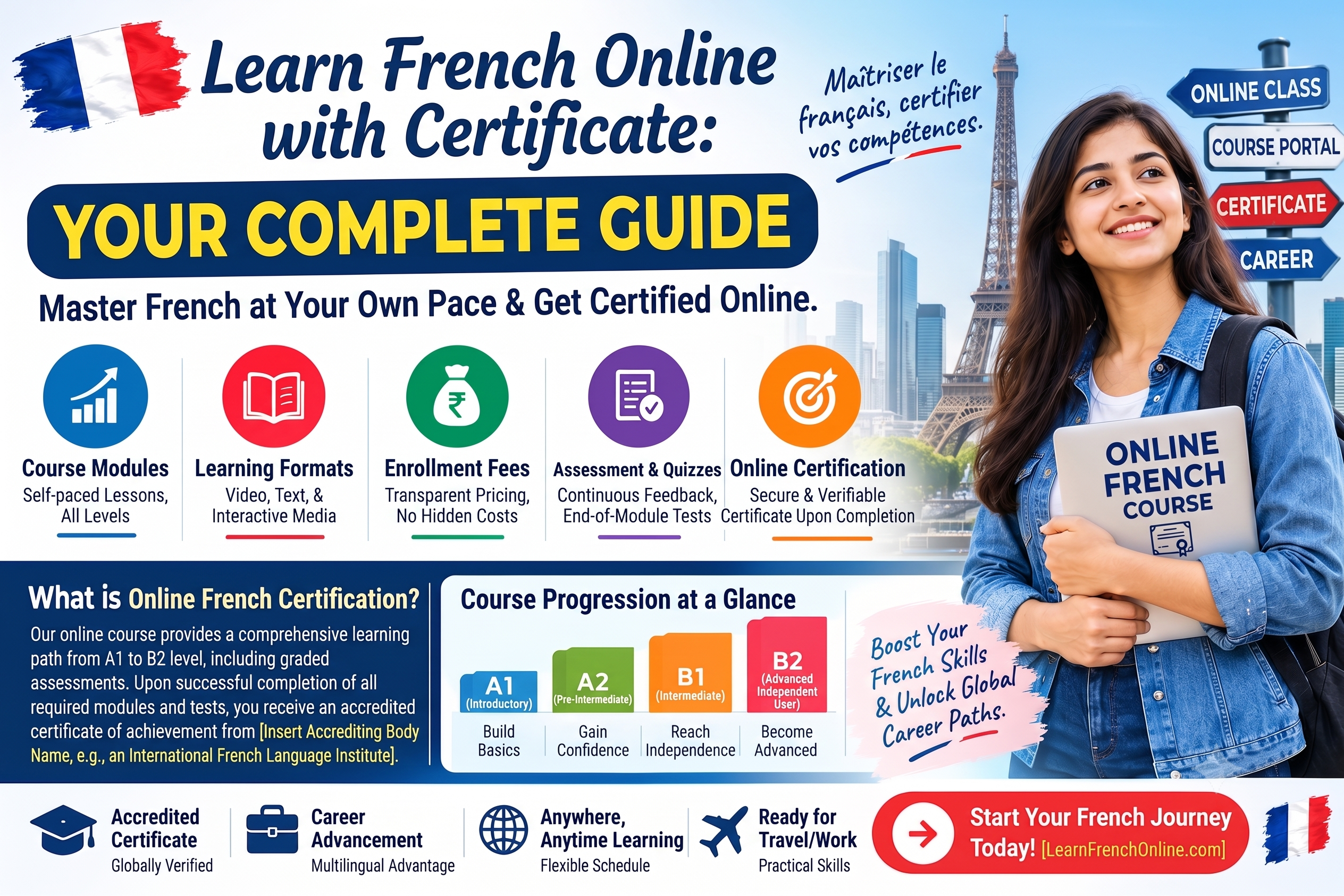
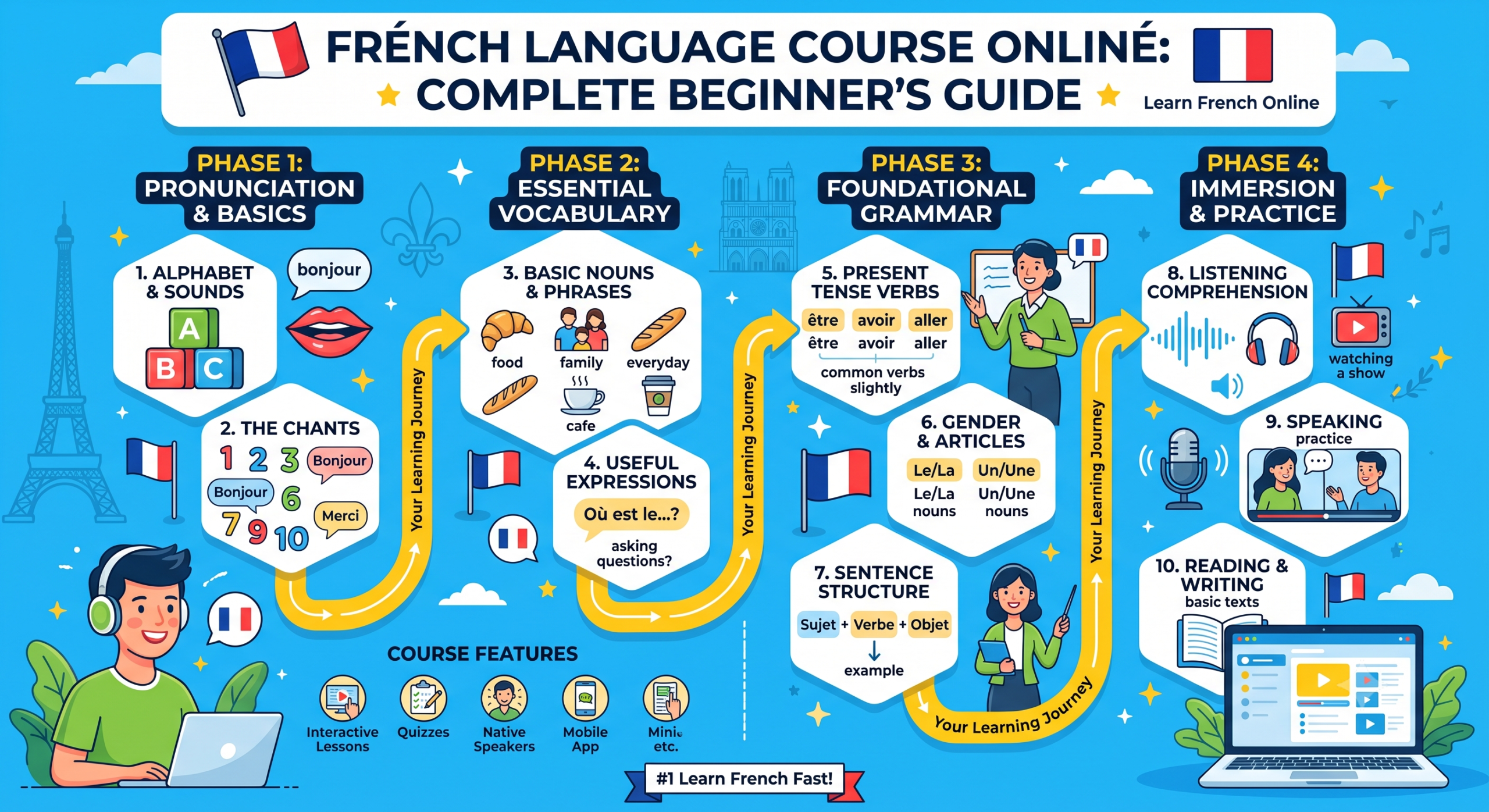
An online French course is a structured program delivered over the internet. It usually follows the CEFR framework (A1 to C2) and includes lessons, exercises, assessments, and feedback.
Common formats include:
- Live one-on-one tutoring via video call
- Live group classes with a scheduled timetable
- Pre-recorded video courses with quizzes and assignments
- University or institute programs such as Alliance Française online classes
- Hybrid programs that combine recorded lessons with live speaking sessions
What Is Self-Learning?
Self-learning means designing and managing your own French education. You choose the materials, set the pace, and track your own progress.
Typical self-learning tools include:
- Language apps such as Duolingo, Babbel, or Memrise
- Textbooks and workbooks
- YouTube channels and podcasts
- French films, series, and music
- Flashcard systems like Anki
- Free grammar websites and online dictionaries
- Language exchange apps for conversation practice
Quick Comparison at a Glance
| Factor | Online French Course | Self-Learning |
|---|---|---|
| Cost | Moderate to high | Free to low |
| Structure | Built-in curriculum | You design it |
| Feedback | Personalized, from a teacher | Limited or self-assessed |
| Flexibility | Medium (live) to high (recorded) | Very high |
| Accountability | High | Low, depends on you |
| Speaking practice | Included in most live courses | Must be arranged separately |
| Speed of progress | Usually faster and more predictable | Variable |
| Certification support | Strong | Requires extra effort |
| Best for | Beginners, exam takers, professionals | Disciplined, budget-conscious learners |
The Case for Online French Courses
1. A Clear, Proven Learning Path
The biggest advantage of a course is structure. Language learning is not random: vocabulary, grammar, listening, and speaking must build on each other. A good course sequences them logically, so you never wonder what to study next.
What this means in practice:
- You learn the present tense before the passé composé
- Pronunciation is introduced early, before bad habits form
- Grammar is revisited at the right intervals
- Each level prepares you for the next
2. Real-Time Feedback From a Teacher
French has tricky areas that are hard to catch on your own:
- Nasal vowels (bon, vin, blanc)
- The French “r” sound
- Silent letters and liaisons
- Gendered nouns and agreement rules
- Subjunctive mood
A teacher can hear your mistakes and correct them immediately. Left uncorrected, errors become habits (a problem called fossilization), and fixing them later takes much more effort.
3. Speaking Practice From Day One
Many self-learners can read French well but freeze when someone speaks to them. Live online courses push you to speak early, in a low-pressure setting. This builds the confidence that apps alone rarely deliver.
4. Accountability and Motivation
When you’ve paid for a course and have a class at 7 PM on Tuesday, you show up. Scheduled lessons, homework deadlines, and classmates all create positive pressure. Most people don’t fail at French because it’s too hard; they fail because they stop.
5. Exam and Certification Preparation
If you need an official qualification, a structured course is usually the safest route.
| Exam | Purpose | Levels |
|---|---|---|
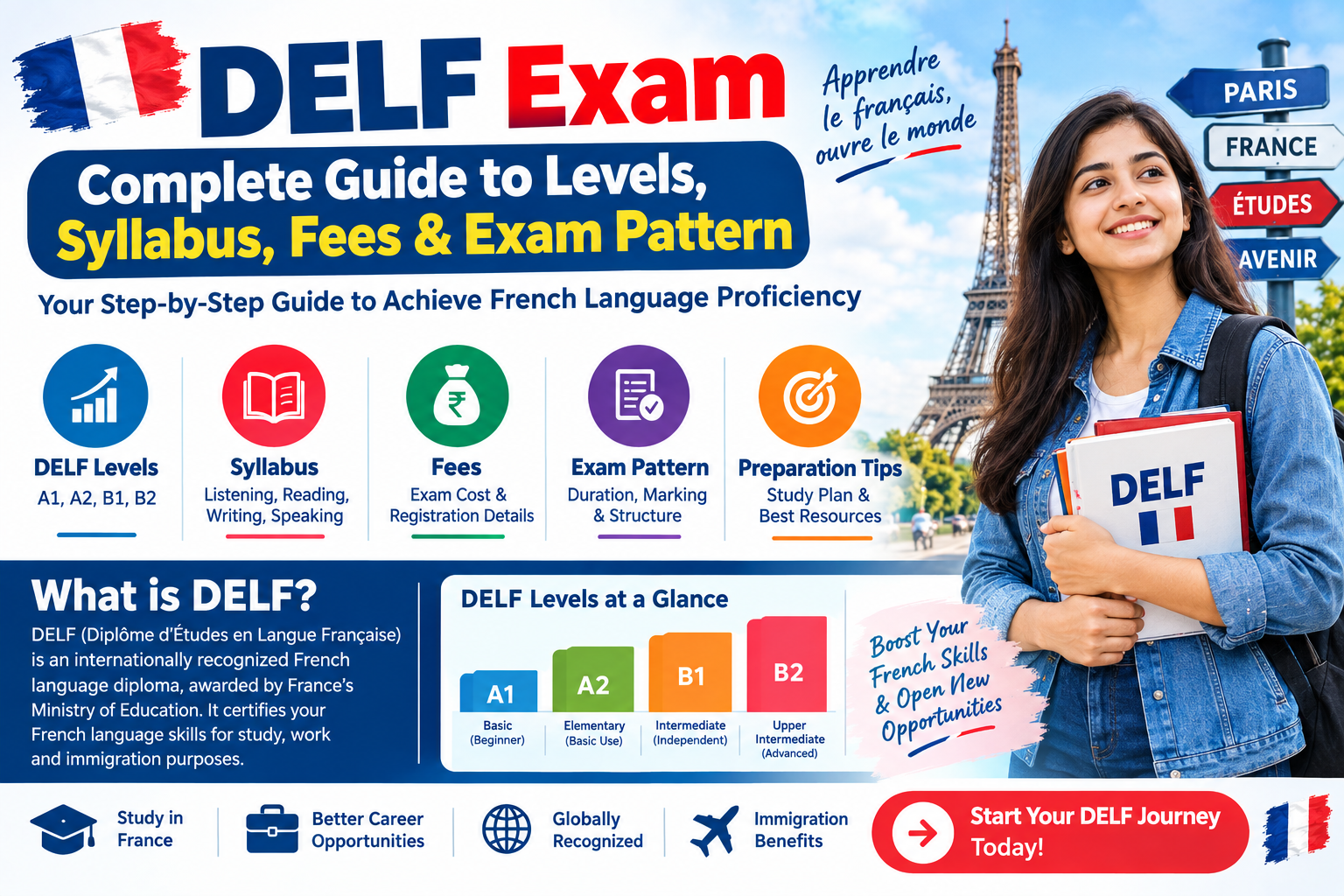
| DELF | Diploma of French language (lifetime validity) | A1–B2 |
| DALF | Advanced diploma | C1–C2 |
| TCF | General proficiency test | A1–C2 |
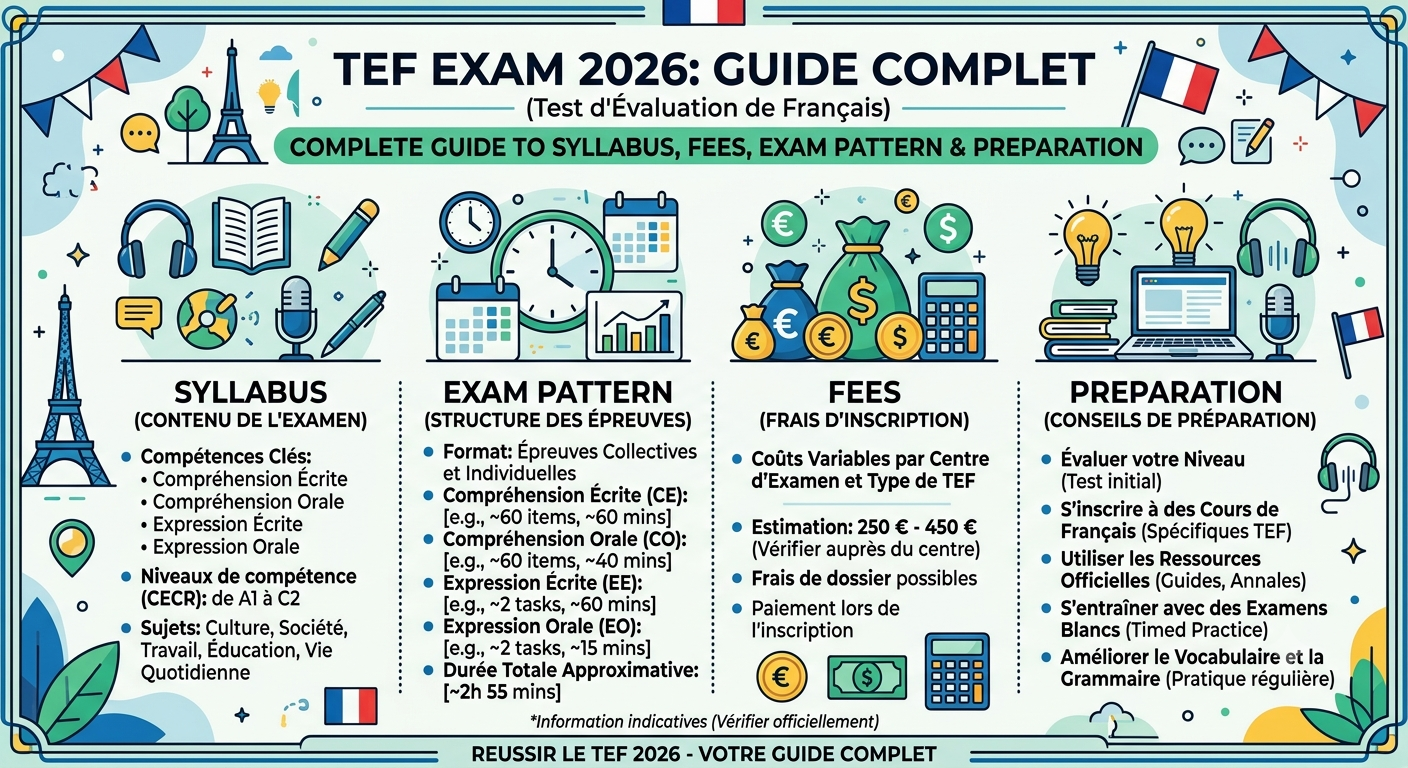
| TEF | Often used for immigration to Canada | A1–C2 |
Courses designed for these exams teach the test format, timing, and scoring criteria, which can make a real difference to your result.
Drawbacks of Online Courses
Online courses aren’t perfect. Be aware of these downsides:
- Cost: Quality courses can be expensive, especially one-on-one tutoring.
- Fixed schedules: Live classes require you to be available at specific times.
- Pace mismatch: Group classes move at the average speed, which may feel too fast or too slow.
- Variable quality: Not all providers are equal, so research is essential.
The Case for Self-Learning French
1. Low Cost or Completely Free
You can build a surprisingly effective French curriculum without spending much. Many excellent resources are free, including podcasts, YouTube lessons, public-broadcaster content, and grammar reference sites.
2. Total Flexibility
Study at 5 AM, on your commute, or during lunch breaks. Spend three weeks on verb conjugations or skip ahead to travel phrases. You control every decision.
3. Personalized Content
Self-learners can build their learning around their interests:
- A cooking enthusiast can follow French recipe channels
- A football fan can watch French match commentary
- A reader can start with graded readers or bilingual books
- A traveler can focus on practical dialogues
Content you enjoy is content you’ll consistently return to.
4. Builds Independence
Self-learners develop skills that transfer to every other subject: planning, resourcefulness, and self-assessment. If you enjoy the process of learning how to learn, this path can be deeply rewarding.
5. Immersion Opportunities
Because you’re not tied to a classroom, it’s easier to weave French into daily life: changing your phone’s language, listening to French radio, or journaling in French.
Drawbacks of Self-Learning
- No guidance: It’s easy to study the wrong things or skip fundamentals.
- Plateau risk: Many self-learners stall at the intermediate stage.
- Weak speaking skills: Without a partner, speaking and pronunciation lag behind reading.
- Motivation dips: There’s no one to notice when you disappear for two weeks.
- Gaps in knowledge: You don’t know what you don’t know.
Detailed Comparison
Cost Breakdown
Prices vary widely by country and provider, so treat these as general ranges rather than exact figures.
| Learning Option | Typical Cost Level | What You Get |
|---|---|---|
| Free apps and YouTube | Free | Basic vocabulary and grammar |
| Premium language app | Low | Structured exercises, limited speaking |
| Textbooks and workbooks | Low | Grammar depth, exercises |
| Pre-recorded online course | Low to moderate | Full curriculum, flexible timing |
| Group live classes | Moderate | Teacher feedback, peer interaction |
| One-on-one online tutor | Moderate to high | Fully personalized lessons |
| University or institute program | High | Accredited, exam-focused |
Key insight: Self-learning is cheaper in money but often costs more in time. A course costs more upfront but can shorten the path to fluency.
Time Efficiency
| Stage | Online Course | Self-Learning |
|---|---|---|
| Setting up a study plan | Done for you | Takes days or weeks of research |
| Finding quality materials | Included | Must evaluate many resources |
| Correcting mistakes | Immediate | Delayed or never |
| Reaching a conversational level | Often faster | Often slower |
| Preparing for an exam | Targeted | Requires extra planning |
Learning Skills Coverage
| Skill | Online Course | Self-Learning |
|---|---|---|
| Reading | Strong | Strong |
| Writing | Strong (with corrections) | Weak without feedback |
| Listening | Strong | Strong with effort |
| Speaking | Strong (live classes) | Weakest area without a partner |
| Grammar | Systematic | Often patchy |
| Pronunciation | Corrected by teacher | Hard to self-diagnose |
| Cultural knowledge | Often included | Depends on your choices |
Which Option Fits Your Situation?
Choose an Online Course If You…
- Are a complete beginner and want a solid foundation
- Need to pass an exam like DELF, TCF, or TEF
- Are moving to a French-speaking country soon
- Want to speak confidently within months
- Struggle with self-discipline or consistency
- Have a work-related deadline for French
- Have already tried self-study and hit a plateau
Choose Self-Learning If You…
- Have a very limited budget
- Are highly self-motivated and organized
- Have previous experience learning another language
- Want to learn French casually or as a hobby
- Have an unpredictable schedule that makes fixed classes difficult
- Enjoy researching and building your own system
Quick Decision Table
| Your Situation | Recommended Path |
|---|---|
| Absolute beginner with a clear goal | Online course |
| Casual learner, no deadline | Self-learning |
| Preparing for immigration or study abroad | Online course |
| Travel basics for an upcoming holiday | Self-learning (apps and phrasebooks) |
| Intermediate learner stuck at a plateau | Tutor or course |
| Tight budget but strong discipline | Self-learning with some paid tutoring |
| Career advancement in a French-speaking market | Online course |
| Learning for fun with films and books | Self-learning |
The Smart Alternative: A Blended Approach
You don’t actually have to choose. Many successful learners combine both methods and get the best of each.
Blended Model 1: Course Core + Self-Study Extras
Use a structured course as your backbone, then supplement it with free resources.
- Course: Provides grammar, structure, and speaking practice
- Self-study: Adds podcasts, films, flashcards, and reading
Blended Model 2: Self-Study Core + Occasional Tutoring
Build your own plan, then book a tutor periodically.
- Self-study: Daily vocabulary, listening, and reading
- Tutor (weekly or bi-weekly): Speaking practice, error correction, progress checks
Sample Weekly Blended Schedule
| Day | Activity | Time |
|---|---|---|
| Monday | Online class (grammar and speaking) | 60 min |
| Tuesday | Flashcards and vocabulary review | 20 min |
| Wednesday | Podcast or YouTube listening | 30 min |
| Thursday | Homework and writing practice | 30 min |
| Friday | Online class or tutor session | 60 min |
| Saturday | French film or series with subtitles | 60 min |
| Sunday | Light review and reading | 20 min |
How to Choose a Good Online French Course
If you decide on a course, evaluate it carefully.
Checklist Before You Enroll
| Question | Why It Matters |
|---|---|
| Are teachers qualified or native speakers? | Ensures accurate pronunciation and teaching |
| Does it follow the CEFR framework? | Gives you clear, comparable levels |
| Is there live speaking practice? | Essential for fluency |
| What is the class size? | Smaller groups mean more speaking time |
| Is there a free trial lesson? | Lets you test teaching style first |
| Are there reviews from real students? | Reveals actual results |
| Is exam preparation offered? | Important if you need certification |
| What is the refund policy? | Protects your investment |
Red Flags to Avoid
- Promises of fluency in 30 days
- No information about teachers
- No trial or sample lessons
- Pressure to pay immediately
- Vague curriculum with no clear levels
How to Succeed at Self-Learning French
If you choose to go it alone, a good system makes all the difference.
Step 1: Set a Specific Goal
“Learn French” is too vague. Try something concrete: “Reach B1 level in 9 months” or “Hold a 10-minute conversation by December.”
Step 2: Build a Balanced Resource Stack
| Skill | Suggested Resource Type |
|---|---|
| Vocabulary | Spaced-repetition flashcards |
| Grammar | A good grammar book plus online exercises |
| Listening | Podcasts, radio, and YouTube |
| Reading | Graded readers, news sites, children’s books |
| Speaking | Language exchange partners or occasional tutors |
| Writing | Journaling, with corrections from native speakers online |
Step 3: Create a Daily Routine
Consistency beats intensity. Thirty focused minutes every day outperforms a four-hour weekend session.
Step 4: Find Speaking Partners Early
Don’t wait until you feel ready. Language exchange platforms and conversation groups let you practice for free. Even a few conversations a month will accelerate progress.
Step 5: Track Your Progress
Take free online CEFR level tests every few months. Record yourself speaking and compare recordings over time.
Common Self-Learning Mistakes
- Relying only on gamified apps
- Avoiding speaking out of embarrassment
- Switching resources constantly
- Ignoring grammar entirely
- Studying irregularly
Realistic Timelines
How long French takes depends on your starting point, study hours, and method. The figures below are rough guidelines based on commonly cited estimates, not guarantees.
| CEFR Level | Description | Typical Study Time (Approx.) |
|---|---|---|
| A1 | Basic phrases and introductions | 60–100 hours |
| A2 | Simple everyday conversations | 150–200 hours |
| B1 | Handle most travel and work situations | 300–400 hours |
| B2 | Fluent discussion of many topics | 500–650 hours |
| C1 | Advanced, professional proficiency | 800–1,000 hours |
| C2 | Near-native mastery | 1,000+ hours |
Learners with guided instruction and regular speaking practice often use those hours more efficiently, though motivated self-learners can reach the same levels with enough time.
Common Myths
| Myth | Reality |
|---|---|
| “Apps alone can make you fluent.” | Apps are useful tools but rarely develop real conversation skills on their own. |
| “Online courses are always better.” | Only if the course is high quality and you actually attend. |
| “Self-learning is always cheaper.” | Cheaper in money, but it may cost more time. |
| “You need to live in France to become fluent.” | Immersion helps, but consistent practice online works well. |
| “Adults can’t learn languages well.” | Adults often learn faster initially thanks to better study strategies. |
Final Verdict
If you want a simple answer:
- Choose an online course if you want structure, speaking practice, accountability, and faster, more reliable progress, especially for exams, relocation, or career goals.
- Choose self-learning if you’re on a tight budget, highly disciplined, and learning French as a flexible hobby.
- Choose a blended approach if you want the strongest results. A course or tutor for guidance and speaking, plus self-study for daily immersion, is the winning formula for most learners.
The best method is the one you will actually stick with. A modest plan followed consistently will always beat a perfect plan abandoned after two weeks. Start with a free trial lesson or a week of self-study, see how it feels, and adjust from there.
Frequently Asked Questions
Can I become fluent in French with only self-study?
Yes, it’s possible, but it requires strong discipline, quality resources, and regular speaking practice with real people.
Is an online French course worth the money?
For most learners with specific goals or deadlines, yes. The structure, feedback, and accountability often save significant time.
How many hours per week should I study French?
Aim for at least 3–5 hours weekly, split into shorter, frequent sessions for best retention.
Are one-on-one tutors better than group classes?
One-on-one tutoring offers more personalization and speaking time, while group classes are more affordable and add social motivation.
What is the best way to practice speaking if I’m self-learning?
Language exchange partners, conversation clubs, and occasional paid tutor sessions are the most effective options.
Can I switch from self-learning to a course later?
Absolutely. Many learners start on their own, then join a course once they want faster progress or exam preparation.
Conclusion
Choosing between an online French course and self-learning isn’t about finding the “right” answer in the abstract. It’s about finding the right answer for you. Be honest about your goals, your discipline, your budget, and how much time you have. Then pick the path, or the combination, that fits your life.
Bonne chance! Whichever route you take, the real secret to learning French is simple: show up consistently, speak early, and enjoy the journey.