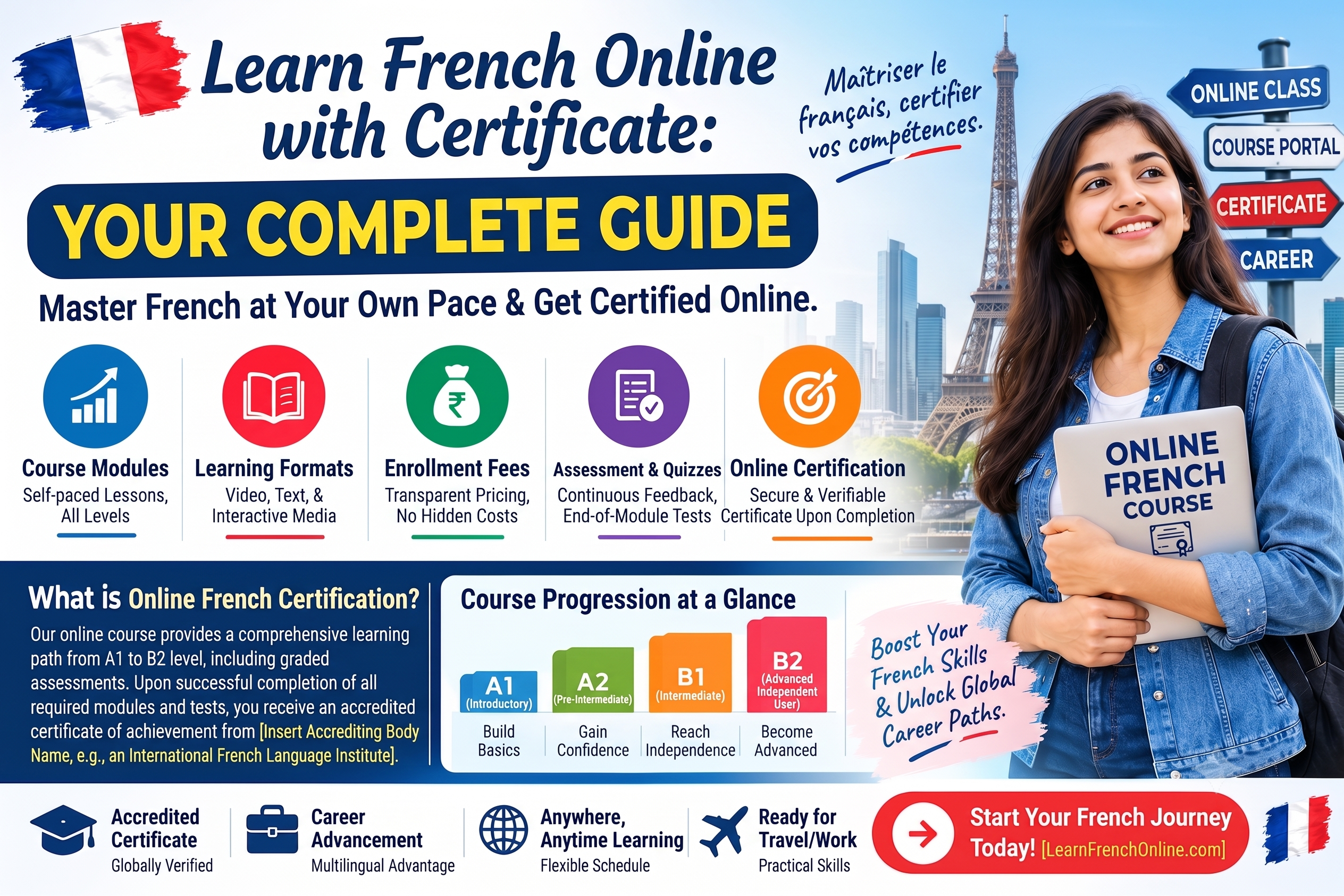
Learn French Online with Certificate: Your Complete Guide
If you’re searching for a way to learn French online with certificate, you’re likely looking for more than just casual language practice — you want proof of your progress that actually holds value, whether for a job application, university admission, or personal milestone. The good news is that today’s online learning landscape makes it entirely possible to build real French fluency and walk away with recognized certification, all without stepping into a physical classroom.
This guide breaks down exactly how certified online French learning works, what kinds of certificates actually matter, and how to choose a course that delivers both genuine skill and credible proof of it.
Why a Certificate Matters When Learning French
Learning a language purely for personal enjoyment doesn’t require certification — but for many learners, a certificate serves a very specific purpose:
University admissions: Many French and Francophone universities require proof of language proficiency, often through DELF or DALF certification, before accepting international students.
Job applications and promotions: Employers in international business, hospitality, diplomacy, and government sectors often ask for documented proof of language ability rather than just a claim on a résumé.
Immigration requirements: Countries like Canada (particularly Quebec) sometimes require standardized French proficiency scores as part of immigration or visa applications.
Personal accountability: Even without an external requirement, working toward a certificate gives structure and motivation that open-ended “just learning for fun” often lacks.
Types of French Certifications You Should Know
Not all French certificates carry the same weight. Here’s a breakdown of the main types you’ll encounter when you learn French online with certificate options.
DELF (Diplôme d’Études en Langue Française)
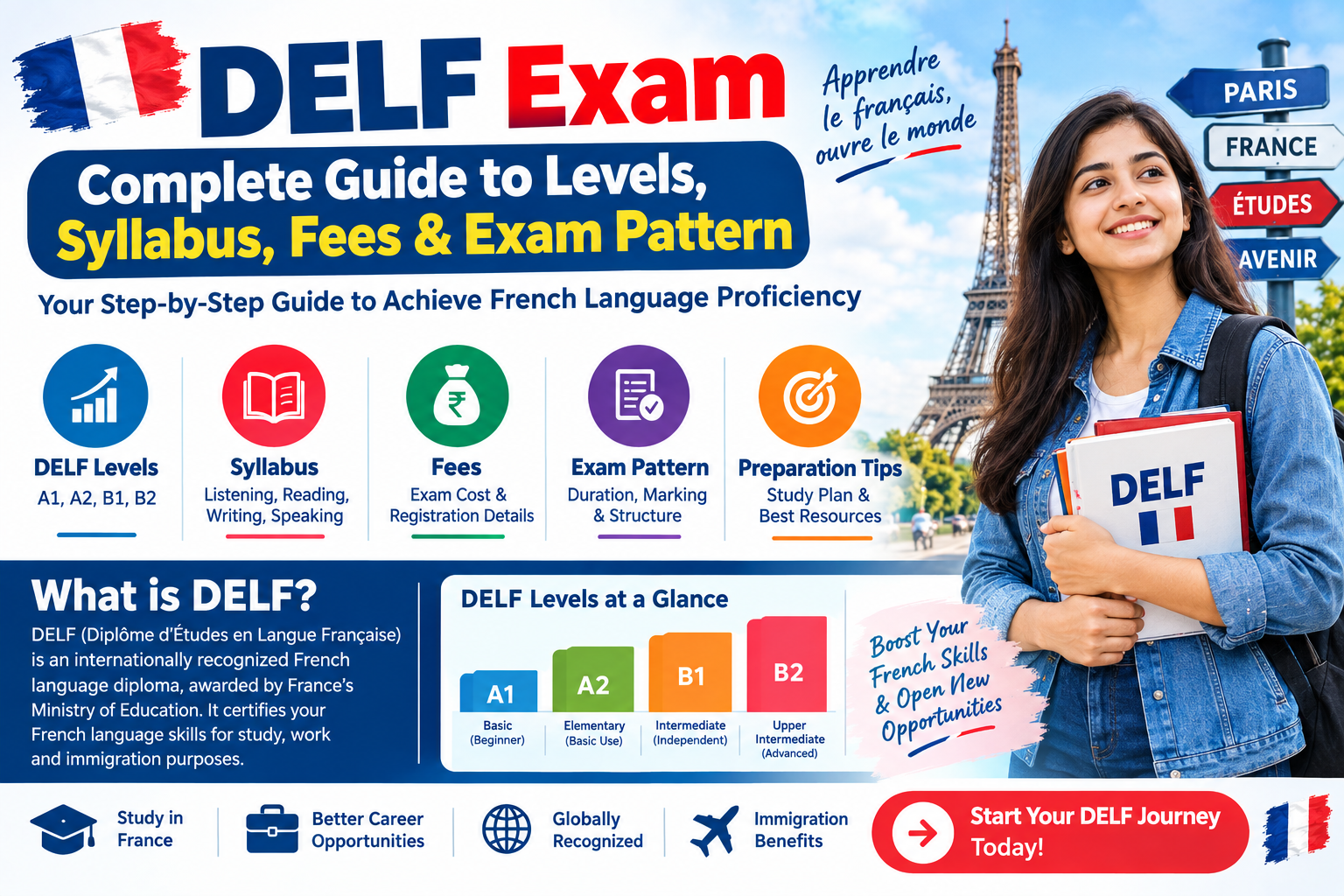
This is the most widely recognized French certification for non-native speakers, issued by the French Ministry of Education. It covers levels A1 through B2 and is valid for life — meaning once you earn it, it never expires. DELF is commonly required for university admission and some job applications.
DALF (Diplôme Approfondi de Langue Française)
DALF covers the advanced levels, C1 and C2, and is aimed at learners seeking near-native fluency, often for academic or professional purposes at a high level, such as postgraduate study in France.
TCF (Test de Connaissance du Français)
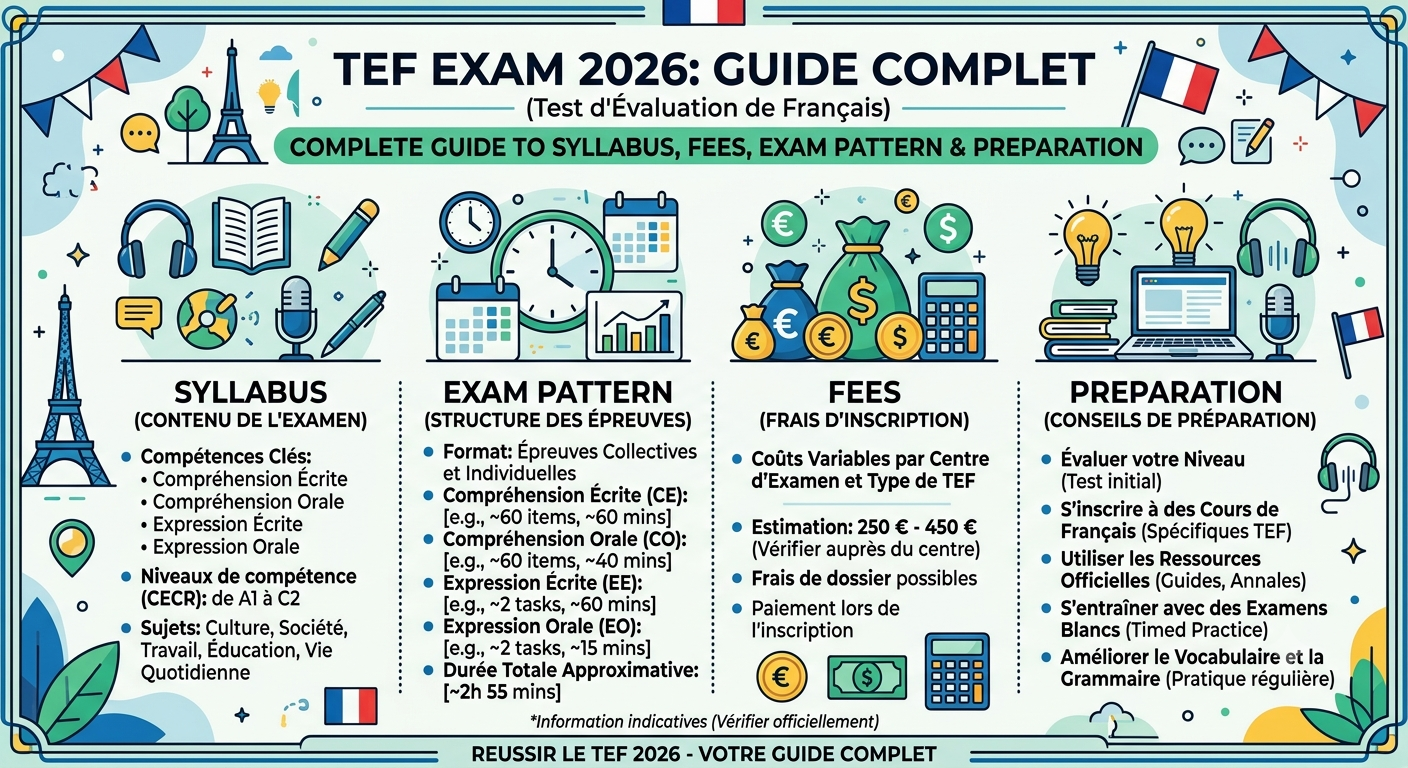
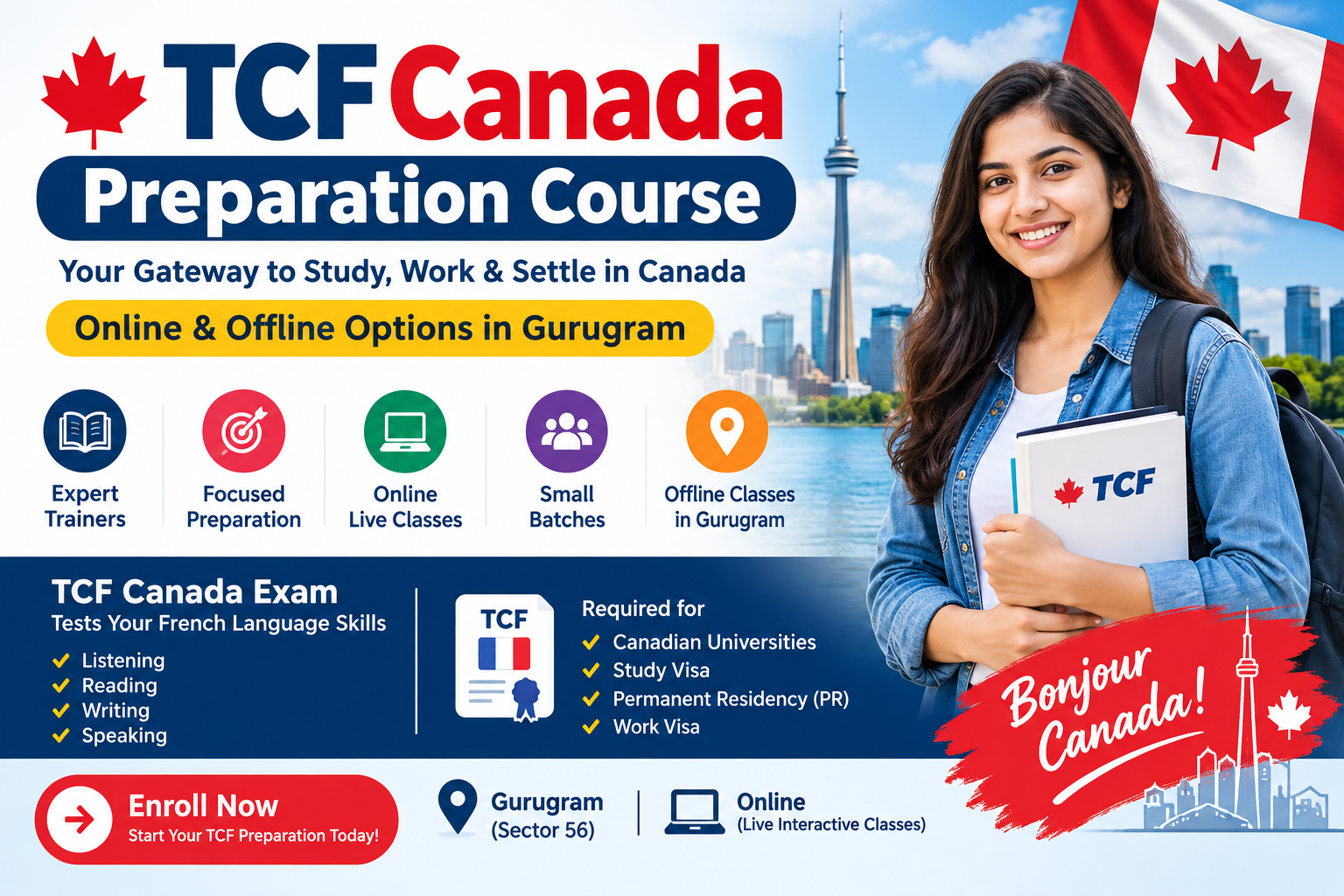
Unlike DELF/DALF, the TCF is valid for only two years and is often used for immigration purposes, particularly for Canada and Quebec-specific visa applications. It’s a single test covering multiple skill levels rather than a level-specific exam.
Course Completion Certificates
These are issued directly by online course providers (like Global Diction Studio) upon finishing a specific course or level. While they don’t carry the same official international weight as DELF/DALF, they’re valuable for showing structured progress, especially when paired with a detailed breakdown of skills covered — and many employers do accept them as evidence of practical ability.
How to Learn French Online and Earn a Real Certificate
Step 1: Choose a Course with a Clear Certification Path
Not every online French course leads to certification, so this needs to be confirmed upfront. Look for programs that either issue their own recognized completion certificates or offer structured preparation specifically for DELF, DALF, or TCF exams.
Step 2: Start with a Level Assessment
A good course should place you at the correct starting level rather than assuming everyone begins at zero. This ensures you’re not wasting time on material that’s too easy or getting overwhelmed by content that’s too advanced.
Step 3: Follow a CEFR-Aligned Curriculum
Certification exams are built around the CEFR framework (A1–C2), so your course content should map directly onto these levels. This keeps your learning aligned with exactly what the certification exam will test.
Step 4: Prioritize Speaking and Listening, Not Just Grammar
DELF and DALF exams test all four skills — reading, writing, listening, and speaking — with a real oral component evaluated by an examiner. A course that only drills grammar and vocabulary without live speaking practice will leave you underprepared for this part of the exam.
Step 5: Take Practice Exams Under Timed Conditions
Simulating real exam conditions, including strict timing, is one of the most effective ways to prepare for the pressure of the actual test. Courses offering mock exams with feedback give you a significant advantage over self-study alone.
Step 6: Register for the Official Exam
Once you’ve prepared, DELF/DALF exams are typically administered through official Alliance Française centers or approved testing sites, sometimes with international availability depending on your location. Course completion certificates, by contrast, are usually issued directly upon finishing the coursework.
What to Look for in an Online French Course That Offers Certification
Structured CEFR-based curriculum — so your learning directly supports whatever certification level you’re targeting.
Live instruction with certified teachers — especially important for developing the speaking and listening skills that certification exams test directly.
Dedicated exam preparation modules — including mock tests, timed practice, and feedback on writing and speaking specifically formatted like the real exam.
Transparent progress tracking — you should be able to see exactly which CEFR level you’re working toward and how close you are to being exam-ready.
Flexible scheduling — exam preparation often requires extra focused sessions in the weeks leading up to a test date, so a course that accommodates additional practice sessions is valuable.
How Global Diction Studio Supports Certified Learning
At Global Diction Studio, learners who want to learn French online with certificate options have two clear paths available.
For those focused on structured skill-building, our course completion certificates are issued at the end of each CEFR-aligned level (A1, A2, B1, B2, C1), giving you documented proof of your progress at every stage — useful for resumes, portfolios, or simply tracking your own growth.
For learners with a specific goal of earning DELF or DALF certification, we offer dedicated exam preparation tracks built around the exact format of the official test: timed mock exams, structured feedback on writing and speaking sections, and live coaching sessions focused specifically on exam strategy and confidence-building.
Every learner also gets access to live classes with instructors experienced in exam preparation, self-paced modules for reinforcing vocabulary and grammar between sessions, and a personal dashboard tracking exactly where you stand relative to your certification goal.
Realistic Timeline: How Long Does It Take?
The time required to prepare for certification depends heavily on your starting level and target certificate:
A1 certification: Typically achievable within 2–3 months of consistent study (3–5 hours per week) for complete beginners.
A2 certification: Usually requires an additional 2–3 months beyond A1, building on foundational vocabulary and grammar.
B1–B2 certification: These intermediate levels often take 6–12 months combined, depending on prior exposure to the language and study consistency.
C1–C2 certification (DALF): Advanced certification generally requires 1–2 years of dedicated study, often including significant immersion or advanced coursework beyond basic classes.
These timelines assume steady, consistent practice rather than sporadic study, which is one of the biggest factors separating learners who reach certification quickly from those who take significantly longer.
Frequently Asked Questions
1. Can I really learn French online with a certificate that employers recognize?
Yes. DELF and DALF certifications are internationally recognized by employers, universities, and government bodies, and can be earned through structured online preparation combined with an official exam sitting.
2. Is an online course completion certificate the same as DELF or DALF?
No. A course completion certificate shows you finished a specific program or level with a provider, while DELF/DALF are official, government-recognized exams. Both have value, but DELF/DALF carry more formal weight for university or immigration purposes.
3. How much does it cost to learn French online with certificate preparation included?
Costs vary depending on the course provider and format (group vs. one-on-one), but online certification-focused courses are generally more affordable than in-person exam preparation programs, since there’s no classroom overhead involved.
4. Do I need to take the DELF/DALF exam online or in person?
DELF and DALF exams are typically administered in person at approved testing centers, such as Alliance Française locations, even if your preparation course was completed entirely online.
5. What French level do I need for university admission in France?
Most French universities require at least a B2 level for undergraduate programs taught in French, though some programs may accept B1 depending on the institution and course of study.
6. How long is a DELF certificate valid?
DELF certification is valid for life and never expires, unlike the TCF, which is only valid for two years and is typically used for immigration purposes.
7. Can beginners realistically earn a certificate, or is it only for advanced learners?
Beginners can absolutely earn certification — DELF A1 and A2 are specifically designed for beginner and elementary-level learners, making certification an achievable goal even in the early stages of learning French.
8. Does Global Diction Studio prepare students specifically for DELF/DALF exams?
Yes. Global Diction Studio offers dedicated DELF/DALF exam preparation tracks, including timed mock exams, structured feedback, and live coaching focused specifically on exam format and strategy.
Final Thoughts
Choosing to learn French online with certificate preparation built in gives you the best of both worlds — genuine, practical fluency and documented proof of your progress that holds real value for academic, professional, or immigration purposes. The key is choosing a course that treats certification as an integrated part of the learning journey, not an afterthought bolted on at the end.
Whether your goal is a course completion certificate to mark your progress or an official DELF/DALF certification to open specific doors, Global Diction Studio’s structured, CEFR-aligned curriculum and dedicated exam preparation tracks are built to get you there with confidence.



Please share your valuable inputs